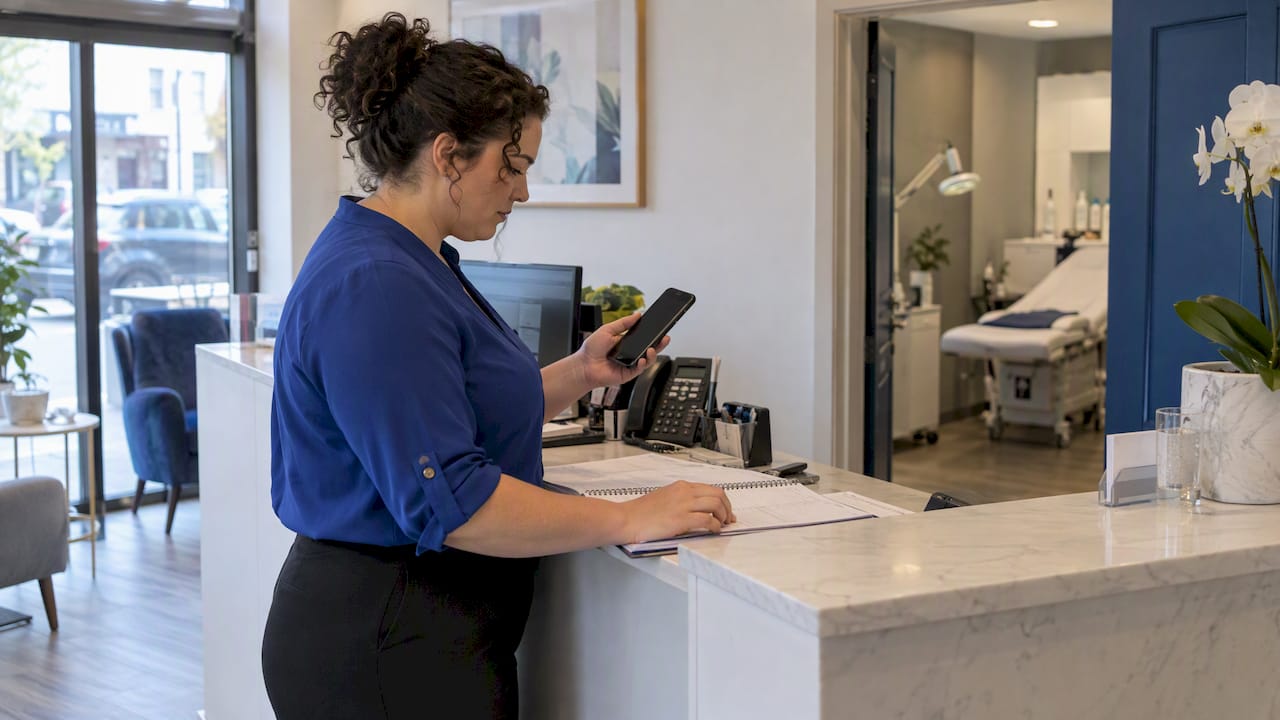

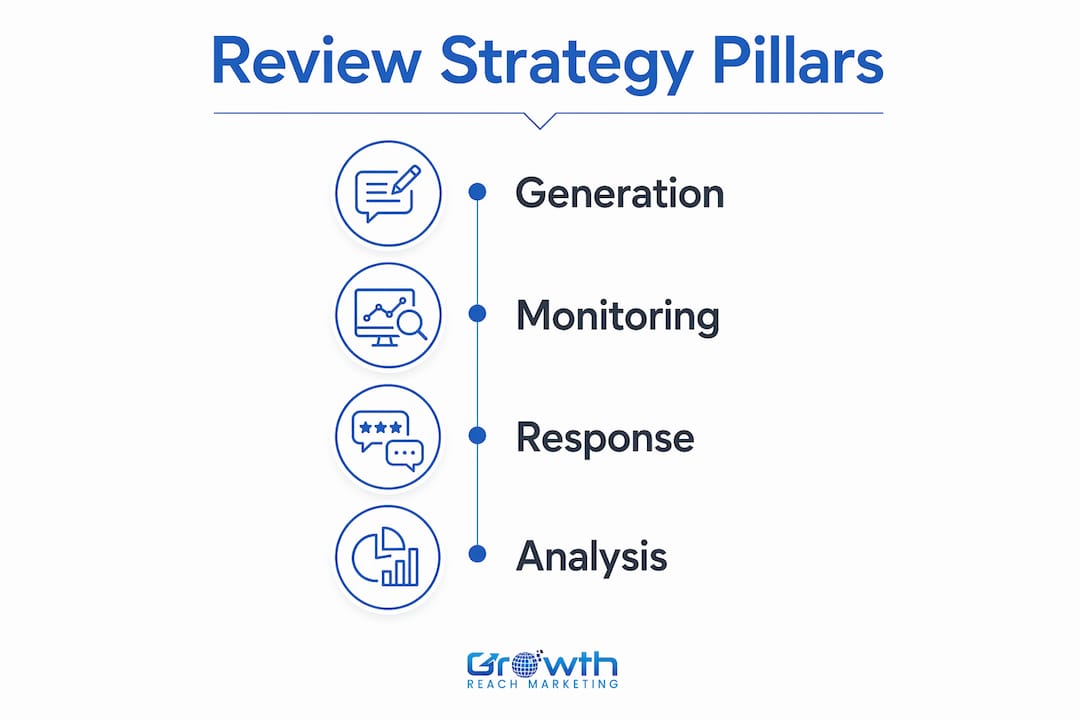
A beauty business Google review strategy is a four-pillar system covering generation, monitoring, response, and analysis, designed to grow your online reputation and bring in new clients consistently. Most salon owners treat reviews as something that happens to them. The ones winning in local search treat reviews as something they build. Your Google Business Profile is often the first thing a potential client sees before they ever visit your website. A systematic approach to managing that profile, starting with how you collect reviews and ending with how you act on them, determines whether your business ranks and converts.
How to build a beauty business google review strategy that works
A complete review strategy runs on four pillars: generation, monitoring, response, and analysis. Each pillar depends on the others. Skip one and the whole system underperforms. Most beauty businesses only focus on generation, which is why their ratings plateau and their local SEO stalls.
The generation pillar is where most owners start, and rightly so. You cannot monitor or respond to reviews that do not exist. The monitoring pillar keeps you aware of what clients are saying in real time. The response pillar turns public feedback into a trust signal for every future client reading your profile. The analysis pillar converts raw review data into decisions that improve your services and your marketing.
This framework is not optional for businesses competing in local search in 2026. Google’s local ranking algorithm weighs review quantity, recency, and owner responsiveness. All four pillars feed those signals directly.
How do you get more google reviews for your salon?
The single most effective timing for a review request is immediately after a successful appointment. Asking right after service captures the client at peak satisfaction, before the feeling fades and life gets in the way. Waiting until the next day cuts your response rate significantly.
Here is what a high-converting generation system looks like in practice:
- Direct link at checkout. Create a short Google review link from your Google Business Profile and display it on your checkout screen, receipt, or a printed card.
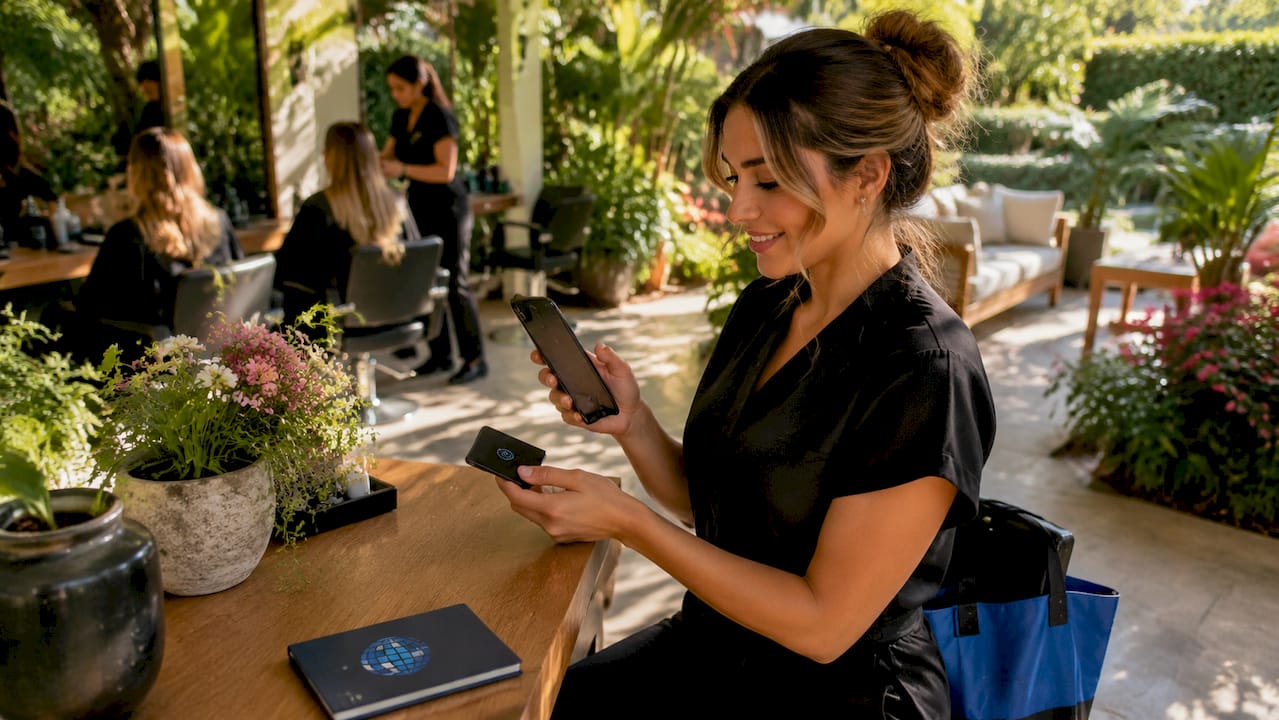
- QR codes posted at the front desk. QR codes and NFC cards reduce friction at the moment of checkout. A client can tap or scan and be on the review form in seconds.
- Staff scripts that feel natural. Train your team to say something like, “We really appreciate your feedback. If you loved your experience today, a quick Google review helps us so much.” Short, genuine, and pressure-free.
- Automated follow-up messages. Set up a text or email workflow through your booking software to send a review request 30–60 minutes after the appointment ends. Tools like GlossGenius, Vagaro, and Fresha all support automated follow-ups.
One rule that cannot be broken: never offer discounts, freebies, or loyalty points in exchange for a review. Google prohibits incentivized reviews as a violation of its fake engagement policy. The penalty is not just a warning. It can mean review removal or profile suspension.
Pro Tip: NFC tap-to-review cards are a newer alternative to QR codes. A client taps their phone to the card and lands directly on your review form. They cost under $20 and remove every barrier between a happy client and a posted review.
Why does responding to reviews improve your ranking?
Responding to every review signals activity and care to both Google and potential clients. Google’s algorithm treats owner responses as a sign of an active, trustworthy business. A profile with 80 reviews and zero responses looks abandoned compared to one with 40 reviews and a reply on every single one.
The target response window is 24–48 hours for all reviews, and same-day for negative ones. Fast responses to negative reviews prevent escalation and show future clients that you take problems seriously. A slow or absent response to a one-star review is often more damaging than the review itself.
Here is what an effective monitoring and response system includes:
- Daily or weekly profile checks. Log into your Google Business Profile at least once a week. Set up Google Alerts for your business name so you catch reviews the moment they post.
- Personalized responses, not templates. Use the client’s name if it appears. Reference the specific service. Generic copy-paste replies read as automated and undermine trust.
- Professional tone on negative reviews. Acknowledge the concern, apologize without admitting fault where appropriate, and offer to resolve the issue offline. Never argue publicly.
- Monitoring software for volume. If your business receives high review volume, tools like Birdeye or Podium send real-time alerts and centralize responses across locations.
Pro Tip: Set a calendar reminder every Monday morning to check your Google Business Profile. Five minutes of weekly monitoring prevents the backlog that makes profiles look neglected and hurts your local SEO.
How to use review data to improve your beauty business
Review analysis is what separates a random review habit from a real reputation strategy. The difference between collecting reviews and using them is the difference between vanity metrics and business intelligence.
Start by tracking your average star rating monthly. A rising trend confirms your service quality is improving. A plateau or dip signals something specific is going wrong, and your reviews will usually tell you exactly what.
| Metric to Track | What It Tells You | How to Act on It |
|---|---|---|
| Average star rating (monthly) | Overall reputation trend | Identify months where rating dropped and investigate service changes |
| Recurring positive themes | What clients love most | Highlight these in your marketing and train staff to replicate them |
| Recurring negative themes | Consistent service gaps | Address in team meetings and adjust processes |
| Staff mentions (positive) | Top performers | Recognize and reward publicly to retain talent |
| Staff mentions (negative) | Training needs | Address privately with coaching or retraining |
One legal detail most beauty business owners overlook: review content is owned by the reviewer, not by you. Repurposing review content for ads, your website, or social media requires explicit consent from the reviewer. Best practice is to reply to the review asking for permission, then document that consent before publishing anywhere.
Use your review themes to inform your content marketing too. If ten clients mention your balayage technique in five-star reviews, that is a signal to create content around that service for local SEO.
What are the biggest mistakes in managing google reviews?
Most beauty businesses make the same handful of errors. Each one either violates Google’s policies or quietly erodes client trust over time.
“The fastest way to damage your Google reputation is not a bad review. It is a bad review with no response.”
The most common mistakes include:
- Offering incentives for reviews. Discounts, free add-ons, and contest entries all violate Google’s policies. The risk is not worth the short-term rating bump.
- Filtering review requests by sentiment. Asking only clients you think will leave five stars is a form of review gating. Google prohibits this practice explicitly.
- Letting responses pile up. Without a response workflow, reviews accumulate unanswered and the profile appears neglected. This weakens both SEO and trust.
- Using the same response template for every review. Clients and potential clients both notice. It signals that you are not actually reading what people write.
- Ignoring low-volume periods. Review generation needs to be consistent, not just active during busy seasons. Gaps in review recency hurt your local ranking.
The fix for all of these is a documented workflow. Write out your scripts, set your response SLA, and assign responsibility to a specific team member. Consistency is the only thing that makes a review strategy work long-term.
Pro Tip: Create a one-page review policy document for your team. It should cover when to ask, what to say, how to respond, and what never to offer. Post it in your staff area and review it quarterly.
Key takeaways
A beauty business Google review strategy works only when all four pillars, generation, monitoring, response, and analysis, run as a consistent, documented workflow rather than a series of one-off actions.
| Point | Details |
|---|---|
| Ask immediately after service | Request reviews at peak satisfaction, right after the appointment ends, to maximize response rates. |
| Respond within 24–48 hours | Reply to every review promptly, especially negative ones, to protect trust and local ranking signals. |
| Never incentivize reviews | Offering discounts or freebies for reviews violates Google policy and risks profile penalties. |
| Analyze review themes monthly | Track recurring feedback to identify service strengths, training gaps, and marketing opportunities. |
| Get consent before repurposing | Always request explicit permission from reviewers before using their words in ads or on your website. |
What i’ve learned running review strategies for beauty businesses
Most beauty business owners underestimate how much time a real review strategy takes to maintain. They set up a QR code, get a few reviews, and assume the system is running. It is not. A strategy requires weekly attention, not a one-time setup.
The businesses I have seen grow their ratings fastest share one habit: they treat review responses with the same urgency as a client complaint in the chair. Speed matters. A response posted six hours after a negative review lands reads very differently than one posted six days later. The first shows a business that cares. The second shows a business that got around to it.
The analysis pillar is the most underused of the four. Owners collect reviews but rarely sit down monthly to read them as a group. When you do, patterns appear that no single review reveals. Three clients mentioning wait times in the same month is a scheduling problem. Five clients praising the same stylist is a retention and marketing asset.
Integrating your review strategy with your broader local SEO approach compounds the results. Reviews feed your Google Business Profile ranking. Your ranking drives more profile views. More views mean more clients, more appointments, and more reviews. The loop is real, but only if you build it deliberately.
— Gerard
How Growthreachmarketing helps beauty businesses win on google
Growthreachmarketing works with salons, aesthetic clinics, and beauty brands to build the kind of local search presence that fills appointment books. If your Google Business Profile is not generating consistent leads, the problem is usually a combination of weak review volume, slow response habits, and an unoptimized profile.
Growthreachmarketing’s local SEO service covers Google Business Profile optimization, review generation workflows, and content strategies built around what your clients are actually searching for. Pair that with a salon Instagram SEO strategy and you have a full-funnel visibility system working across every platform your future clients use. If you are ready to turn your reviews into a real growth engine, Growthreachmarketing is the team to build it with you.
FAQ
What is a google review strategy for beauty businesses?
A Google review strategy is a four-pillar system covering generation, monitoring, response, and analysis, run as a consistent workflow to grow your online reputation and local search ranking. It replaces ad-hoc review requests with a documented, repeatable process.
When is the best time to ask clients for a google review?
The best time is immediately after a successful appointment, while the client’s satisfaction is highest. Waiting longer reduces the likelihood they will follow through.
Can i offer a discount in exchange for a google review?
No. Google prohibits incentives such as discounts, freebies, or contest entries tied to leaving a review. Violations risk review removal or profile suspension.
How quickly should i respond to google reviews?
Respond to all reviews within 24–48 hours and to negative reviews the same day when possible. Prompt responses build trust and send positive activity signals to Google’s local ranking algorithm.
Can i use google reviews in my marketing materials?
Only with explicit consent from the reviewer. Review content is owned by the person who wrote it, so you must request permission and document it before using any review in ads, your website, or social media.