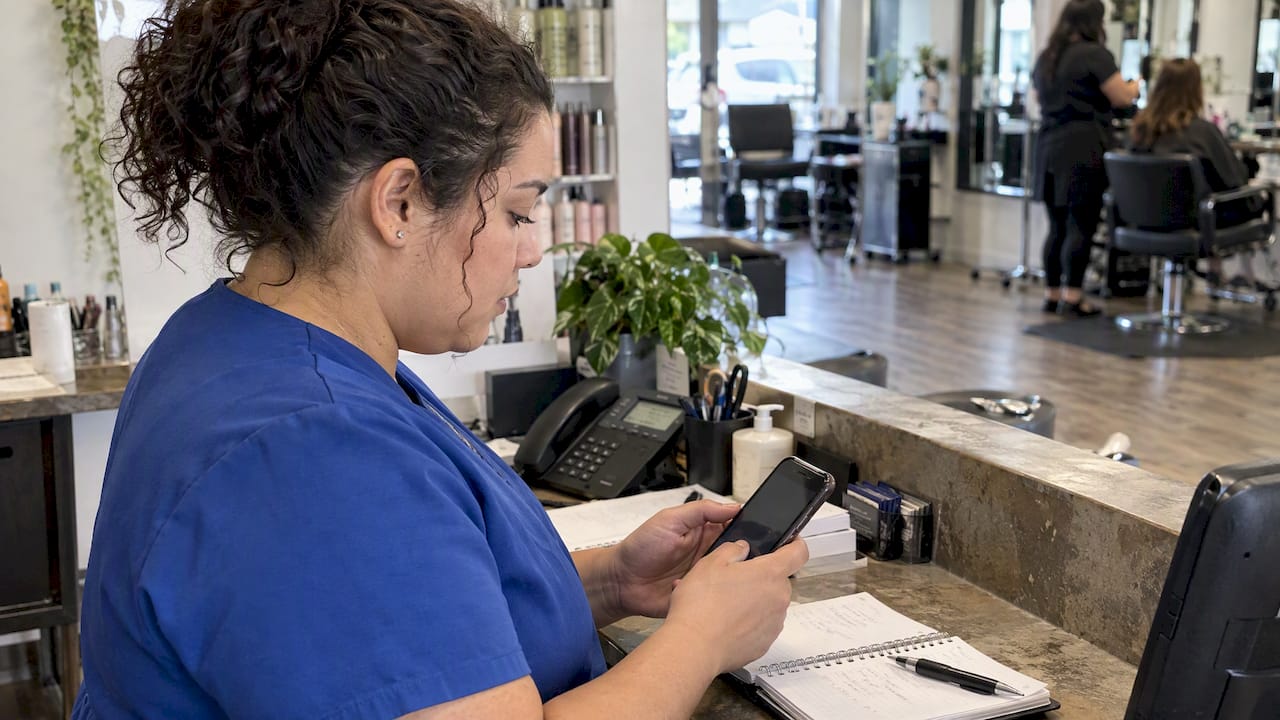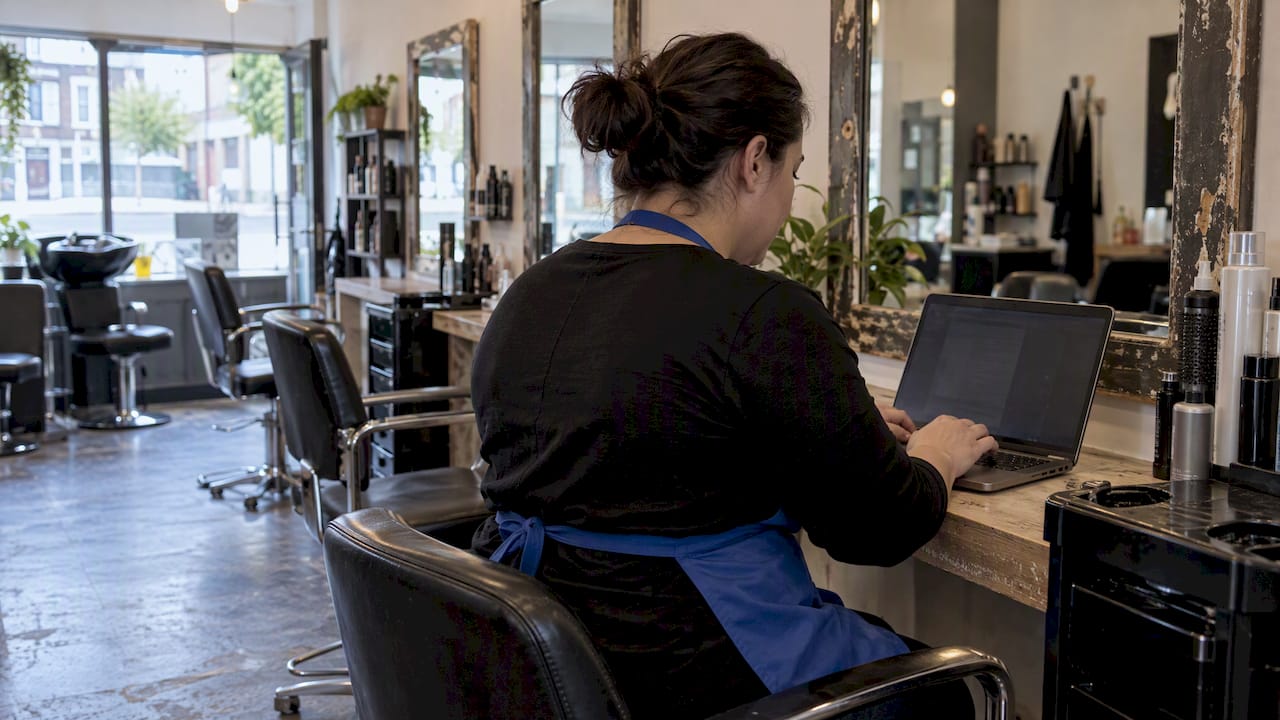

A med spa website must do one thing above everything else: convert visitors into booked consultations. That means treatment-specific pages, consented before/after galleries, fast Core Web Vitals, and integrated booking—not a digital brochure. 53 % of mobile users leave a site if it takes longer than three seconds to load, and most med spa prospects are browsing on their phones between errands. If your site isn’t built for that moment, you’re losing bookings before anyone reads a word.
The five non-negotiables for any med spa website:
- Primary CTA visible above the fold on every device (“Book a Consultation” or “Request Appointment”)
- Dedicated treatment pages with SEO-optimized copy, FAQs, and pricing signals
- Online booking and intake forms with calendar sync and HIPAA-aware data handling
- Before/after gallery organized by treatment, with documented consent workflow
- Local SEO foundation including Google Business Profile integration and city-targeted service pages
Pro Tip: Before briefing any vendor, run your current site through Google PageSpeed Insights. Screenshot the Core Web Vitals scores — LCP, INP, and CLS — so you have a baseline to hold the new build against.
Table of Contents
- What pages and features does a med spa website need?
- Does your site’s technical setup support bookings?
- How does local SEO work for med spa service pages?
- Before/after galleries: how to do them right
- What booking and automation integrations reduce no-shows?
- What copy and conversion elements increase booked consultations?
- What does a med spa website project cost in the U.S.?
- How do you choose the right agency for your med spa site?
- How Growthreachmarketing builds med spa websites
- Key Takeaways
- What actually drives bookings in 2026
- Growthreachmarketing offers a free med spa site audit
- Useful sources and further reading
What pages and features does a med spa website need?
Generic templates fail med spas because they’re built for brochures, not bookings. Here’s a prioritized checklist you can use to audit your current site or brief a vendor.
High-impact pages (build these first):
- Homepage with a single, clear primary CTA and trust signals above the fold
- Individual treatment pages for every service you offer (Botox, filler, laser, body contouring, etc.)
- Provider bios with credentials, licensing, and photos
- Location pages for each city or neighborhood you serve
- Membership and packages page
Trust and conversion features:
- Before/after gallery organized by treatment type, with consent documentation
- Google reviews widget or embedded testimonials with named clients and outcomes
- Pricing signals (“starting at $X”) to reduce sticker shock
- Financing or payment plan options displayed near CTAs
Operational features:
- HIPAA-aware intake forms when collecting protected health information
- Online booking with Google/Outlook calendar sync
- Deposit and payment processing at booking
- Membership management portal
Nice-to-have additions: gift card sales, a treatment blog targeting city-specific keywords, SMS/email automation hooks, and a patient portal for returning clients.
Does your site’s technical setup support bookings?
Speed is a revenue metric. Optimizing Core Web Vitals reduces bounce rates and directly supports higher booking conversion — measure LCP, INP, and CLS before and after launch.

| Technical element | Why it matters | Business outcome |
|---|---|---|
| SSL certificate | Encrypts all data in transit | Required for HIPAA-aware forms; builds trust |
| LCP under 3 seconds | Page loads fast on mobile | Fewer abandoned sessions |
| Mobile-first design | Most prospects browse on phones | Higher booking conversion |
| CDN + optimized images | Reduces server load globally | Consistent speed across markets |
| Secure form handling | Protects intake data | Reduces legal and compliance risk |
Platform guidance: Squarespace works for boutique single-location sites that don’t need deep integrations. Shopify fits if product e-commerce is central. For multi-location builds or advanced practice-management integrations, custom WordPress or Next.js gives you the flexibility templates can’t match.
Security and compliance deserve their own line item in any scope of work. If your intake forms collect protected health information, your vendor needs to sign a Business Associate Agreement and use encrypted form submissions. ADA/WCAG accessibility compliance reduces legal risk and improves usability for a broader audience — most template builders skip this entirely.
Pro Tip: Require your vendor to deliver source code access, CMS credentials, a staging environment, and a documented backup schedule at handoff. If they won’t commit to it in writing, that’s a red flag.
How does local SEO work for med spa service pages?
Treatment-specific landing pages paired with city modifiers are how local prospects find you. A page titled “Botox in Austin, TX” with proper schema markup will outperform a generic “Services” page every time.

Structure your content in three tiers: treatment category pages (e.g., “Injectables”) link to treatment detail pages (e.g., “Botox”), which link to city/location landing pages (e.g., “Botox in Austin”). This internal linking architecture builds topical authority and helps Google understand your geographic coverage. For a practical guide to structuring those links, clinic SEO internal linking is worth reviewing.
LocalBusiness and MedicalBusiness schema, FAQ schema, and service schema are table stakes for local visibility. Add FAQ sections to every treatment page addressing common objections: downtime, cost, safety, and expected results. Structuring content around entities and FAQs also improves your chances of appearing in AI overviews and featured snippets, which is increasingly where high-intent local searches resolve. For a deeper look at why this matters for aesthetic clinics, aesthetic clinic SEO strategy covers the full picture.
Statistic: Treatment + city page combinations targeting queries like “lip filler near me” or “laser hair removal [city]” consistently capture the highest-intent local traffic for med spas.
Before/after galleries: how to do them right
Before/after galleries organized by treatment and paired with provider credentials typically convert 2–3× better than text-only proof pages. Done wrong, they’re a compliance liability. Done right, they’re your strongest sales tool.
- Capture written consent before photographing — include date, treatment, and intended use (website, social, ads)
- Store images with metadata: patient ID, treatment date, provider, consent document reference
- Organize the gallery by treatment type, with filters for body area and provider
- Write unique captions for each photo that mention the treatment and general outcome
- Add descriptive alt text to every image for SEO and accessibility
- For paid landing pages, pull the most relevant gallery images to match the ad’s treatment claim
Pro Tip: Using consented before/after images on paid landing pages increases ad-to-page relevance scores in Google Ads, which lowers your cost per click. It’s one of the fastest ways to improve paid campaign efficiency without changing your bid strategy.
For more on using before/after content in marketing, salon before/after photo marketing covers the workflow in detail.
What booking and automation integrations reduce no-shows?
Integrated online booking is the single biggest operational lever most med spas underuse. The booking event is also your most valuable marketing data point.
Key integrations to require in any build:
- Calendar sync (Google Calendar, Outlook) so staff availability is always accurate
- Practice-management platforms (Boulevard, Vagaro) via direct integration or API
- Deposit and payment processing at the time of booking to reduce no-shows
- HIPAA-aware intake forms or secure redirects to your practice-management system when collecting PHI
- UTM parameter capture at booking so you know which ad, page, or keyword drove the appointment
- SMS/email automation for confirmations, 48-hour reminders, and post-treatment review requests
Map every booking event to a GA4 conversion goal and your CRM. That’s how you calculate cost per acquisition and lifetime value — the two numbers that tell you whether your marketing is actually working.
Statistic: Capturing UTM source data at the booking step lets you attribute revenue directly to specific campaigns, which is the foundation of any credible CAC calculation.
What copy and conversion elements increase booked consultations?
Treatment pages need to answer three questions before a visitor will book: What will this do for me? What does it cost? Is this provider qualified? Lead with outcome statements, not procedure descriptions. “Smoother skin in one session, no downtime” converts better than “our laser uses 1064nm wavelength technology.”
Use “starting at $X” pricing on every treatment page. It removes the friction of “I don’t know if I can afford this” without locking you into a fixed price. Place the booking CTA both above the fold and immediately after the pricing section — those are the two highest-converting positions on a treatment page.
Membership pages deserve the same conversion attention as treatment pages. Some practices report 3–4× higher retention with well-structured membership programs.
Social proof near the CTA matters more than social proof at the bottom of the page. Put your Google review count and star rating, a short testimonial, and a provider credential within two scrolls of the booking button.
What does a med spa website project cost in the U.S.?
| Build type | Typical timeline | U.S. price range | What’s included |
|---|---|---|---|
| Baseline | 4–6 weeks | ~$4,500 | Homepage, 5–6 treatment pages, booking, basic SEO |
| Full-featured | 8 weeks | $6,000–$10,000 | Treatment + city pages, gallery, intake forms, schema |
| Premium custom build | 12 weeks | From $12,000 | Multi-location, e-commerce, advanced integrations, ADA audit |
Beyond the build, budget for monthly recurring costs: hosting and security ($50–$150/month), maintenance and updates ($200–$500/month), and a marketing retainer for SEO and paid ads if you want the site to generate leads rather than just exist.
Discovery and brand audit, wireframes, visual design, development, QA, and post-launch SEO ramp are the standard phases. The post-launch ramp — the first 60–90 days of content publishing, link building, and local citation cleanup — is where most of the organic ranking gains actually happen.
How do you choose the right agency for your med spa site?
Five questions to ask on every discovery call:
- Can you show me three med-spa-specific websites you’ve built, with before/after galleries and treatment pages?
- What are the Core Web Vitals scores for those sites, and can I verify them in PageSpeed Insights?
- How do you handle HIPAA-aware intake forms — do you use a BAA, and with which form or PMS provider?
- What platform will you build on, and will I own the source code and CMS access at handoff?
- What does post-launch support look like — SLA, response time, and what’s included versus billed separately?
Red flags to watch for:
- No med-spa portfolio, or portfolio with no treatment pages or galleries
- Can’t provide performance metrics for existing client sites
- Presents a template as a custom build without disclosing the base theme
- No experience integrating Boulevard, Vagaro, or similar practice-management systems
- No mention of accessibility testing or ADA/WCAG compliance
Score proposals on four dimensions: strategic depth (do they understand med-spa buyer psychology?), technical capability (Core Web Vitals, integrations, security), compliance awareness (HIPAA, ADA), and conversion focus (CTA structure, booking flow, analytics setup). A vendor who scores well on design but poorly on the other three will deliver a beautiful site that doesn’t book.
How Growthreachmarketing builds med spa websites
Growthreachmarketing’s process starts with a brand and treatment architecture audit before a single wireframe is drawn. The deliverables at each phase are defined upfront:
- Discovery: treatment hierarchy, competitor gap analysis, keyword mapping for treatment + city combos
- Design: editorial photography direction, typography, and CTA placement informed by conversion data
- Development: treatment-page templates, before/after gallery system with consent metadata fields, provider bio templates, and booking integration
- Launch prep: Core Web Vitals baseline, GA4 event tracking tied to bookings, local SEO setup including Google Business Profile optimization
- Post-launch: documented maintenance plan, monthly reporting on bookings, conversion rate, and local rankings
The measurable outcomes Growthreachmarketing targets: increased booking conversion rate, reduced cost per acquisition through better organic and paid traffic quality, and improved local rankings for treatment + city queries. For clinics that want to pair the website build with a growth strategy, aesthetic clinic growth strategy outlines how SEO, ads, and conversion work together.
Key Takeaways
A conversion-first med spa website requires treatment-specific pages, consented galleries, fast Core Web Vitals, HIPAA-aware intake handling, and integrated booking tied to analytics.
| Point | Details |
|---|---|
| Speed kills or converts | 53 % of mobile users leave after 3 seconds; Core Web Vitals scores must be measured pre- and post-launch. |
| Galleries outperform copy | Before/after galleries organized by treatment convert 2–3× better than text-only pages. |
| Local SEO needs structure | Treatment + city page combinations with LocalBusiness schema drive the highest-intent local bookings. |
| Budget realistically | Baseline med spa builds in the U.S. typically start around $4,500; full-featured builds range $6,000–$10,000; premium custom builds start near $12,000, plus monthly recurring costs. |
| Growthreachmarketing delivers end-to-end | Growthreachmarketing handles treatment architecture, gallery consent systems, booking integration, and post-launch SEO for U.S. med spas. |
What actually drives bookings in 2026
The med spas gaining ground right now aren’t the ones with the most beautiful websites. They’re the ones where the booking path has no dead ends. A sticky CTA that follows the visitor down a treatment page, a gallery filter that lets someone find results for their exact concern, a membership page that makes the math obvious — these are the details that separate a site generating 40 bookings a month from one generating 12.
Membership pages, in particular, are underbuilt on most med spa sites. Practices that present membership value clearly and make sign-up frictionless tend to see retention compound in ways that paid acquisition never can. Combine that with a local SEO foundation that captures “botox near me” traffic and a booking flow that captures UTM data, and you have a system that gets measurably better over time.
The agencies worth hiring in 2026 are the ones who talk about booking conversion rate and cost per acquisition in the first conversation, not just page count and design revisions.
Growthreachmarketing offers a free med spa site audit
Growthreachmarketing works with U.S. med spas and aesthetic clinics that need a website built to book, not just impress. The free site audit covers your current speed and Core Web Vitals scores, your booking funnel from landing page to confirmation, and your local SEO gaps for treatment + city queries.
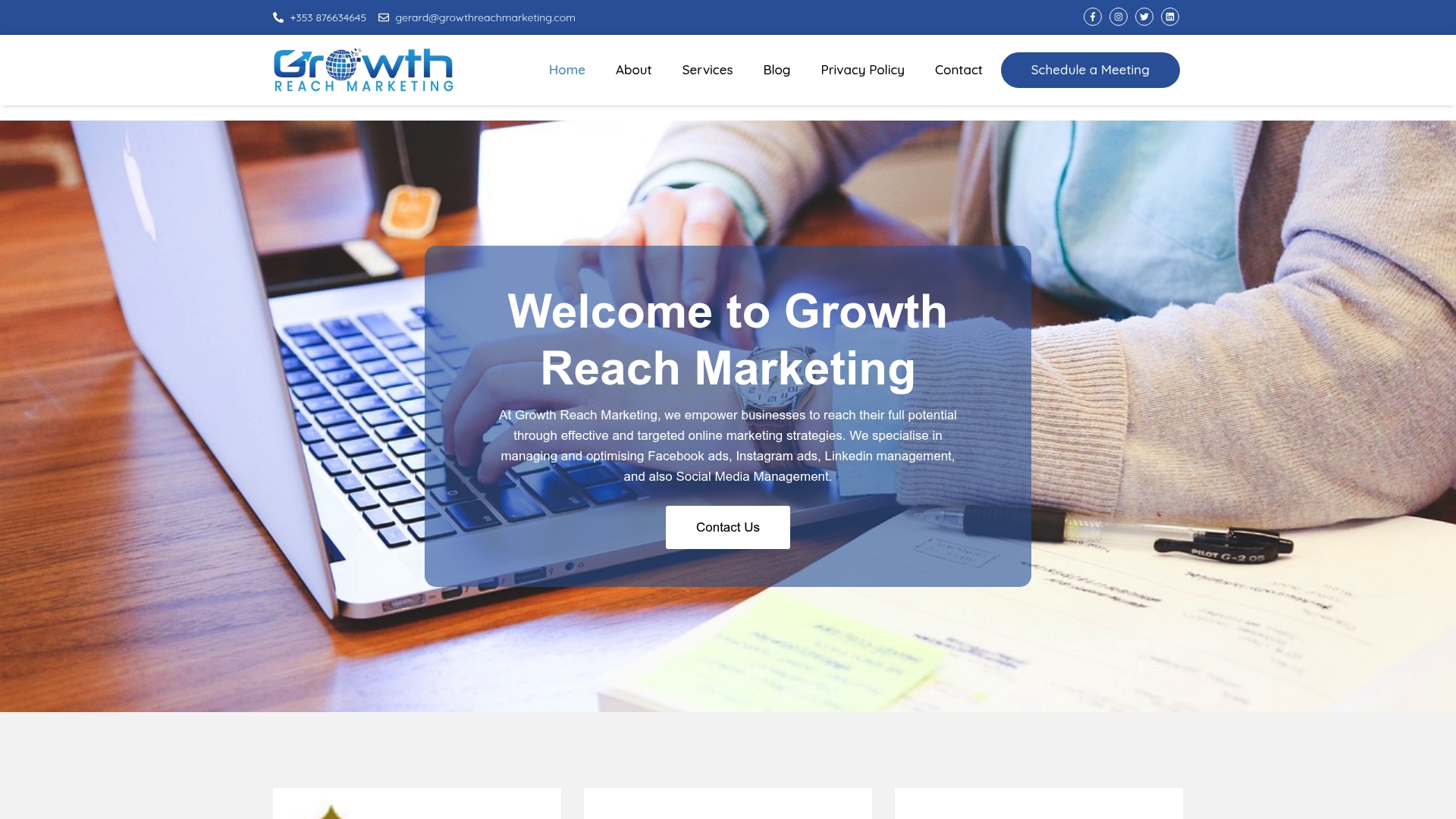
If your site isn’t converting visitors into consultations at the rate your ad spend deserves, that’s the gap the audit identifies. Growthreachmarketing’s team handles everything from treatment architecture and gallery consent systems to Google Ads for medical aesthetics and post-launch SEO. Request your free audit at Growthreachmarketing and get a clear picture of what your site is costing you in missed bookings.
Useful sources and further reading
- Med Spa Website Design — Zain Saeed: Speed benchmarks, gallery conversion data, pricing reference, and platform guidance used throughout this article.
- Med Spa Web Design — Stethon Digital Marketing: Template failure analysis, HIPAA intake requirements, and ADA compliance notes.
- Med Spa Website Design — DevRivo: Local SEO schema requirements and AI/answer-engine content structuring.
- Med Spa Website Examples — Colorlib: Platform selection guidance by business model and scale.
- Aesthetic Clinic SEO Strategy — Growthreachmarketing: Full SEO strategy framework for U.S. aesthetic clinics.
- Online Booking’s Role in Med Spa Growth — Growthreachmarketing: Operational and marketing case for integrated booking systems.
- Beauty Brand Local SEO — Growthreachmarketing: Tactical local SEO guide for beauty and clinic brands.
- Website Redesign SEO: Protect Your Rankings — My Business Marketing Coach: Practical checklist for protecting organic rankings during a site migration or redesign.
Recommended
- Online Booking’s Role in Med Spa Growth in 2026 – Growth Reach Marketing
- 1784450218936_Med-spa-owner-booking-management-on-laptop – Growth Reach Marketing
- Med Spa Email Nurturing Benefits That Fill Your Calendar – Growth Reach Marketing
- 1783829821246_Med-spa-owner-reviewing-brand-strategy-notes – Growth Reach Marketing